2026 NBA Summer League: “The Culture Is Shifting” in Washington
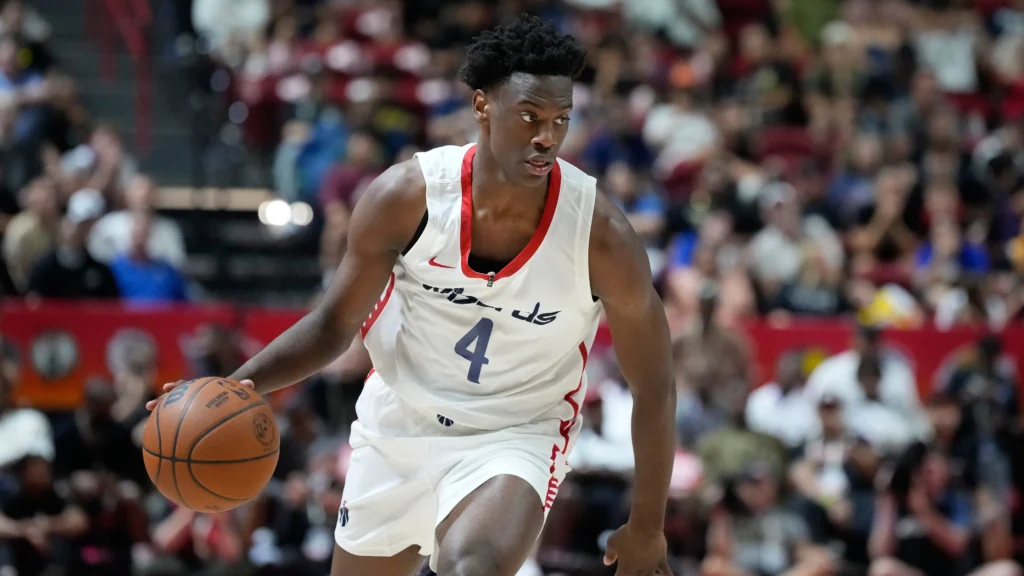
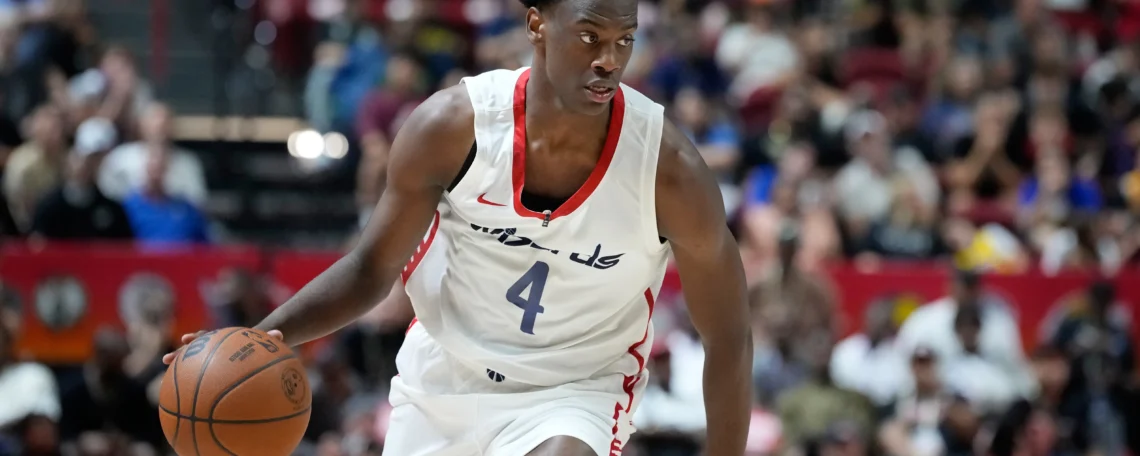
For the first time in what seems like forever, all eyes are on the Washington Wizards. It may only be Summer League – a meaningless slew of games set in the summer doldrum – but it matters for Washington fans nonetheless. The Wizards have not been relevant in nearly a decade, when they pushed the Boston Celtics to a Game 7 in the second round of the 2017 Playoffs. However, thanks to AJ Dybantsa, the number one pick in the 2026 NBA Draft, along with the additions of former multi-time All-Stars Trae Young and Anthony Davis, there is an unprecedented level of excitement and hope in Washington as the team prepares for the upcoming season.

There has long been a perception that the Wizards are one of the worst-run and historically unsuccessful franchises in the NBA – which is valid, seeing as Washington hasn’t accomplished anything noteworthy on the basketball court since the 1970s. Thus, the Wizards have historically been unable to attract top-tier talent through free agency. This left the franchise with only two options: trade, or draft, for star players.

Washington’s lead decision-makers, General Manager Will Dawkins and President Michael Winger, have done just that throughout their entire tenure in the front office. From wisely getting off Bradley Beal’s massive contract to drafting Dybantsa and trading for Young and Davis, the Wizards have completely remade their league-wide image (save for Young’s perplexing contract extension). Up until this year, Washington had unfortunate draft luck, but still made the most out of it: they drafted major contributor Kyshawn George with the 24th pick two years ago; last year, the franchise drafted Tre Johnson, a three-level scorer, and Will Riley, a lanky, tall, and unorthodox guard with immense upside. 

Dawkins and Winger don’t just draft basketball players; they draft people, first and foremost. When evaluating a prospect, they place a heavy emphasis on players’ work ethic, personality, and their willingness to learn and improve.

In an interview regarding how he approaches the draft process, Dawkins stated, “A big part of it is spending time with them as players, and going on campus and interviewing them and seeing what they’re about…It’s all about knowing them as people, and we draft people not just players.” 

This has been evident throughout this year’s Summer League games. The entire Wizards roster was present courtside to watch Dybantsa’s Summer League debut, including Anthony Davis, who has been the subject of unrelenting trade rumors all offseason. During Young’s press conference regarding his new contract extension, the team was there to watch and give support. This goes to show that these players enjoy each other’s company, willing to learn from each other, and bond off the court, which can go a long way in terms of how much this team is able to achieve next season.

Speaking of the Summer League, the Wizards have had great success thus far. In two games, the team has two wins with no losses to speak of – and despite it only being the Summer League, this feat is undoubtedly impressive for a franchise that has largely been losers on the court for the past half-century. How the Wizards reached this point, though, is even more noteworthy.

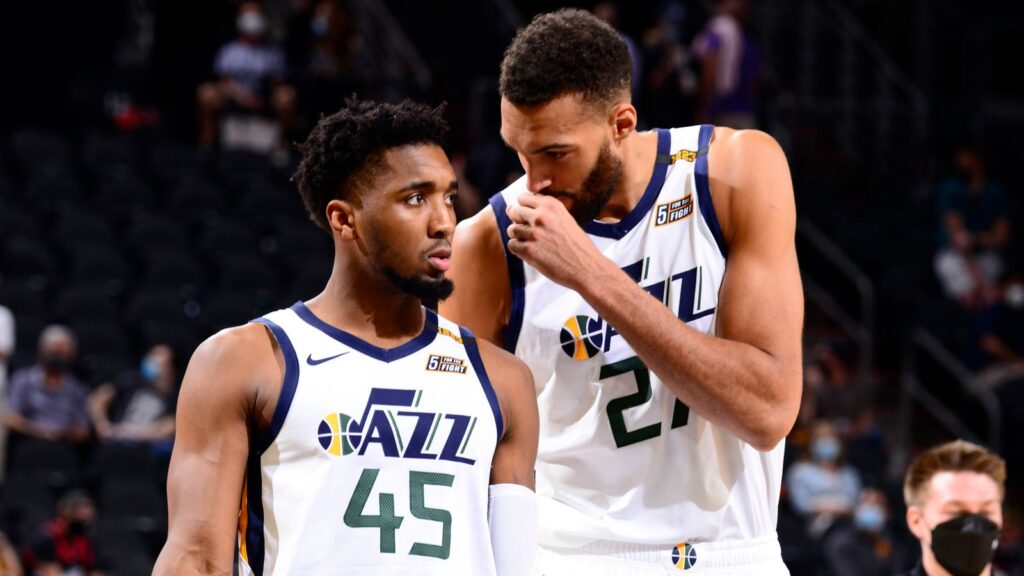
Dybantsa has been billed as a potential NBA superstar, and through two games for Washington, he has certainly lived up to the hype. In his debut against the Utah Jazz, the No. 1 pick scored the Wizards’ first points in Summer League in true Dybantsa fashion. Handling the ball near the center-court logo, Dybantsa navigated through a pick and roll with a Jazz player smothering him. With a nifty hesitation to freeze the defender, he used his otherworldly athleticism to accelerate quickly and drive towards the basket. Using his long strides and tremendous flexibility, he scored a reverse layup after exploding off of two feet:

Less than half a minute later, Dybantsa demonstrated his passing potential, threading a perfect pass to Riley in transition for an and-one jam:

Minutes later in the first quarter, as Dybantsa blew by the first line of defense looking for another paint basket, he was instead met by another defender. This time, instead of muscling his way past, he calmly stepped back, elevated, and nailed a short jumper as he got fouled:

Dybantsa also demonstrated his ability to create his own shot under pressure. Late in the first quarter, with the shot clock at 4 seconds, he quickly went to work. Using his quick first step, he found a good angle and drove by a defender at the three-point line. Three defenders began to collapse into the paint to provide help, but it did not matter. Gathering the ball near the free throw line, he took one gargantuan step and used his exceptional leaping ability to posterize the defense:

Dybantsa also had 8 free throw attempts in his debut, which would have amounted to 15 had the NBA not implemented a one free throw rule in the Summer League. His ability to generate rim pressure this early in his career is exactly what Washington’s roster needs, as his physical, grinding style complements the games of the Wizards’ other draft picks such as Tre Johnson, Riley, and George, who all struggle (at varying degrees) to get to the rim.

Defense has been a concern for Dybantsa as he enters the league, but he has answered his critics through his first couple of Summer League games. In his second outing, he tallied three steals and two blocks, showing great on-ball defensive effort after he was frequently chided for his lack of stocks (steals and blocks) during his lone college season. 

Midway through the first quarter, Dybantsa switched onto No. 7 pick Darius Acuff after a screen was set. Because Acuff, being a small guard, could use his explosiveness to get by the bigger Dybantsa, the latter sagged off Acuff slightly to prevent this scenario from unfolding. Acuff, with space, began to launch the three pointer, but Dybantsa was able to use his 7-foot wingspan to block the attempt at three:

This play demonstrates that Dybantsa has the ability to be a versatile defender at the NBA level if he remains engaged on the defensive end. With Trae Young and Anthony Davis on the Wizards to carry most of the offensive burden, Dybantsa will be able to shift more of his energy towards the defensive end. Most importantly, he has shown a desire to excel defensively:

“I think I can be a first team All-Defensive player. I’m just trying to make an impact on that end.”

While there was plenty of good to dissect from Dybantsa’s first couple of games, there are also areas in which he needs to improve. The good thing for him is that they can all be improved through more practice and repetition. By far the most concerning issue is his three point shooting, as through the two games he played, he shot 1/11, or 9.1%, on his threes. His shot seemed to be flat, with his misses bouncing off of the front of the rim. He was not getting enough lift or arc on his threes, and this may be due to the fatigue of routinely playing against double and triple teams throughout games. Dybantsa will need to tweak his release a bit in order to become a competent NBA shooter, while also practicing his shot more.

Dybantsa also seemed unwilling to pass the ball when he was double or triple teamed. Instead of passing, he often settled for contested, inefficient fadeaway midrange shots. This might be because of the lack of quality players surrounding him, but in the NBA, the Wizards cannot afford empty offensive possessions if they are trying to be competitive and win games. As he develops into a star player, he will learn to balance creating for others and looking for his own shots, similar to what Anthony Edwards has been learning the past couple of seasons.  

All in all, through two Summer League games, AJ Dybantsa has looked every bit like a No. 1 pick, averaging 25 points, 7 rebounds, 2 assists, 2.5 steals, and 1.5 blocks per game. It’s not just Dybantsa who is impressing in Summer League for Washington; sophomores Johnson and Riley have also had standout games, with 26 and 32 points respectively. Johnson, in his first Summer League game of 2026, looked lethal from three as always, but also showcased his stronger frame by absorbing contact on his way to finishing at the rim and the midrange. Riley, in his second 2026 Summer League game against the Kings, looked more comfortable from three (he shot 75% from long range in the game) and was able to play through more contact to go along with his creativity on the ball. Both players need to improve their defense, as Johnson routinely got  blown by and Riley was largely unable to contain stronger players with his slight frame. 

Dybantsa, Johnson, and Riley all seem to be a level above the Summer League competition. From a No. 1 pick and sophomores who have had a good amount of NBA experience, this is exactly what Washington fans wanted to see from their Summer League “Big 3.” If Washington’s Summer League performance – two wins in as many games – is a precursor for what’s to come in October and beyond, Wizards fans have everything to be excited about for the upcoming season.

Examining the Worrying Trend of Jayson Tatum’s Three-Point Percentage

Jayson Tatum has had one of the best summers imaginable from a basketball standpoint. From winning his first NBA title to signing a record-breaking contract extension to getting selected to Team USA’s Olympic roster, Tatum’s offseason, at least on the surface, seems to be going as smooth as can be. But if you dig in deeper, you’ll notice that Tatum has been struggling with his shooting, primarily from three-point range. 

Through 19 games of the 2024 NBA playoffs, Tatum shot a putrid 28.3% from downtown. For reference, that mark is well below the league average last season of 36.6%, and it’s even worse considering Tatum’s career average 3P%, which stands at 37.5%. In 5 games of the 2024 Finals against the Mavericks, Tatum attempted 38 threes and made only 10, good for 26.3%.

What’s more, not only has Tatum’s three-point accuracy gone down, but also his average attempts from beyond the arc. In the 2024 Playoffs, Tatum attempted an average of 7.3 three-pointers per game, connecting on 2.1 of them. In the 2023-2024 regular season, however, he took 8.2 threes on average, and the ball went through the net an average of 3.1 times. Generally, if the number of three-pointers a player attempts decreases, their efficiency and three-point percentage should increase. With Jayson Tatum, this seems not to be the case. Despite taking less threes in the playoffs than in the regular season, Tatum still managed to register a much worse success rate. Collectively throughout the 2024 playoffs, Team USA exhibition games, and the Olympics, Tatum has made three pointers at a 24.1% clip. On top of this, the lone shot beyond the arc that Tatum attempted in the Olympics was a wide-open, corner three pointer that ended up hitting the edge of the backboard, nowhere close to the rim.

It’s not unusual for a superstar to be in a slump; it happens all the time. However, their shot always comes back to them in a few weeks, or a month at most. Yet Tatum’s struggles and inaccuracy from three-point territory have been plaguing him for nearly four months. This begs the question: Is Tatum merely in some sort of long-term slump, or is there more to it?

RELATED CONTENT:

The Wizards Have Finally Accepted the Harsh Truth

The Wizards have been mired in mediocrity for the past half decade, only making the playoffs once in that span – that too, as an 8th seed. A lot of this has to do with John Wall, as his untimely injuries – most notably, when he tore his left achilles –  single-handedly caused the Wizards to fall out of playoff contention after leading the Wizards to four playoff appearances from 2013 to 2018. As his injuries continued to hamper Wall, the Wizards shipped the face of the franchise off to the Rockets, and got the 2016-2017 MVP Russell Westbrook in return. That season, the Wizards managed to squeeze into the playoffs only to face the first seeded Philadelphia 76ers in the first round and lose in five games. Bradley Beal, who was Wall’s sidekick in all those previous postseason runs, transformed into an elite scorer for the Wizards, averaging 31.3 points per game in the 2020-21 regular season. Westbrook made NBA history by breaking the all-time record of most triple-doubles amassed by a single player. However, despite the stellar seasons for Beal and Westbrook, the Wizards failed to make the conference semifinals yet again, and things were looking downcast. An opportunity arose to trade Westbrook to the Lakers, and former Wizards General Manager Tommy Sheppard took it. Washington acquired Kyle Kuzma, Kentavious Caldwell-Pope, and Montrezl Harrell from the Lakers in exchange, and, since then, has not indicated any clear sense of direction and were toiling between rebuilding and trying to be good – that is, until very recently.

The Wizards were the first organization to make a splash in the 2023 offseason, as they traded Beal and a couple of bench warmers to the Phoenix Suns for an aging, 38 year-old Chris Paul. Beal’s no-trade clause made it difficult for the Wizards to seek out a good trade, but getting Paul was the best they could do. By trading Beal, Washington has finally accepted the harsh truth – they need to reset and build through the draft. Nikola Jokic, a two time NBA MVP and a recently crowned champion, said after his Denver Nuggets defeated the Miami Heat in the 2023 Finals that, “You need to be bad, then you need to be good. Then when you’re good, you need to fail, and then when you fail, you’re going to figure it out. I think experience is something that is not what happened to you—it’s what you’re going to do with what happened to you.” This is the lesson the Wizards had trouble learning. They remained obstinate despite their clear struggles and shortcomings to try and stay in playoff contention year after year until they gave up by trading Bradley Beal this week. This lesson is one that is hard to learn for everybody, but one especially challenging for professional sports teams. So much is on the line that teams always want to remain competitive regardless of the circumstances. But a significant part of the path to a championship is being patient and trusting the process. The Wizards are just embarking on it.

So, how exactly do you carry out this process? Well, the key to the rebuilding process is to “hit” in the Draft. A “hit” means that a team drafted a player that later goes on to thrive in the NBA, and, in some cases, the player is so good that he becomes the face of the franchise! Unfortunately for the Wizards, they have done anything but make good selections in the Draft since they selected Bradley Beal in 2012 – who, incidentally, Washington traded to initiate this entire cycle! There are a few good prospects from which the Wizards can select in Thursday’s upcoming Draft, such as Anthony Black, Ausar Thompson, and Kobe Bufkin with their 8th pick. Washington should target a player who can run the offense and has infinite upside so that they can develop that player into a cornerstone for the team, reminiscent of what the Golden State Warriors did with scrawny Stephen Curry back in the early 2010s. After the Wizards draft their cornerstone, they must continue building through the Draft in order to attain a co-star, akin to how the Warriors drafted Klay Thompson to serve as a reliable sidekick to Stephen Curry. After that, the Wizards must make a series of trades to acquire compatible role players to round out the roster, which again, is similar to what the Warriors did: they acquired Gary Payton II, Otto Porter Jr., and Juan Toscano-Anderson to support the Warriors’ stars during their 2022 championship run. Of course, the odds of Washington drafting a franchise-altering player and crafting a compatible team around him are slim. Luck plays a major part – look no further than how the Nuggets’ championship roster was constructed, and how they lucked out with their selection of Nikola Jokic in the second round. 

Washington can also trade up in this year’s draft if they wish to expedite their tedious rebuild, but that would be next to impossible because they simply don’t have enough enticing assets to compete with what other teams, such as the New Orleans Pelicans, have to offer for a higher pick in the Draft. The Portland Trail Blazers in particular seem to be open and willing to trade their number 3 pick in exchange for anyone that they believe can push them into championship contention. The Wizards can attempt to put together a trade package that will land them the Blazers’ pick, but that is extremely unlikely, for the only player they can offer that will generate even fleeting interest from Portland is Kristaps Porzingis. Therefore, as of now, their best hope to craft a championship-contenting roster is through the Draft.

Luck has never truly been on the Wizards’ side on Draft night for as long as anyone can remember, but thanks to the actions of Washington’s newly hired President of Monumental Basketball, Michael Winger, the Wizards’ luck might change sides by the time the highly anticipated 2023 NBA Draft rolls around.  

Watch Out for the Tyrese Explosion

Wedwak

Ever since Tyrese Haliburton slipped to the 12th pick in the 2020 NBA Draft, he hasn’t really done much that drew attention. The Kings had an overdose of guards that overshadowed him, and Haliburton just didn’t look like a good fit. Understanding the situation they had on their hands, Sacramento dealt Haliburton to the Indiana Pacers.

From that point on, Haliburton has been the centerpiece of Indiana’s rebuild. In 26 games with his new team, he posted borderline All-Star numbers, and saw a dramatic increase in nearly every stat:

2020-2021 Kings2021-2022 Kings2022 Pacers
PPG13.014.317.5
APG5.37.49.6
SPG1.31.71.8
Tyrese Haliburton Stats Year by Year

When the Pacers decided to let Malcom Brogdon walk, it was crystal clear that they wanted Haliburton to be the heartbeat of the team. In the small sample of games last season, he showed that he was more than ready for the challenge. 

The Pacers have given Haliburton the green light to dominate, and the Kings might regret their decision to trade him for years to come.

643 miles to the east lives another Tyrese. Tyrese Maxey, the late first round pick drafted the same year as Haliburton. He has a different story though, and we will start with the Sixers drafting him.

Coming into the 2020 Draft, Maxey was projected to be a mid-first round pick, because of his finishing prowess and passing abilities. He was drafted by Philadelphia, and had to prove his worth during his spot minutes in his rookie season. 

He did just that, and he was rewarded last season by playing 20 more minutes each game. His scoring average more than doubled, and he connected on his threes more often, at a clip of 42.7%. It didn’t just stop there.

 With the arrival of James Harden, he soared to even greater heights. With Harden running the show, Maxey was able to get better looks, increasing his field goal percentage, making shots more often than not. The ball went through the net half of the time when he released it behind the arc. It can’t get any better, right? 

Wrong. In the 2022 Playoffs, Maxey played like his hair was on fire, averaging more points than Harden. He stepped up his game, trying to make up for the talent they lost because Joel Embiid was hampered by injuries. Unfortunately, the Sixers didn’t get past the second round, falling short to the first seeded Heat. 

Maxey’s combination of speed, quickness, and strength makes him a unique player. From a mid-first round pick with limited minutes in his inaugural season, to now, obliterating  defensive schemes for an easy bucket, Maxey has limitless potential.

Two years previously, when both Tyrese’s were drafted, the volcano was calm and quiet. Now, it’s ready to explode, and Haliburton and Maxey are too.

The Cavaliers May Be Just One Step Away From Making the Playoffs

Dec 13, 2021; Cleveland, Ohio, USA; Cleveland Cavaliers forward Kevin Love (0) celebrates his three-point basket with his teammates in the fourth quarter against the Miami Heat at Rocket Mortgage FieldHouse. Mandatory Credit: David Richard-USA TODAY Sports

In this century, the Cavaliers have not made the Playoffs even once without LeBron James wearing red and gold. However, this past season, the Cavs were millimeters away from achieving that goal. There may be an answer to why they dropped two straight games to be eliminated from Playoff contention.

At the end of the 2021-2022 regular season, Cleveland owned the 8th seed. They had a surprising breakout season, led by the young trio of Darius Garland, Evan Mobley, and Jarett Allen. The additions of Lauri Markkanen and Ricky Rubio (who was traded midseason) really sped up Cleveland’s rebuild. Then, with the arrival of Caris LeVert before the trade deadline, the Cavs were poised to make the jump to the Playoffs. Unfortunately, injuries to Ricky Rubio, Caris LeVert, and Jarett Allen were all factors leading to Cleveland’s fall in the standings.

Yet the Cavs managed to stay afloat, attaining a winning record, to earn the 8th seed. They qualified for the Play-In Tournament, but they were overwhelmed by Kyrie Irving, Kevin Durant, and the Nets. Cleveland gave a good fight, but fell behind in the later stages of the game. The Cavs then battled the Hawks a couple days later, but the Hawks, led by offensive menace Trae Young, surged ahead in the second half to capture the win. 

There was something that both teams had that Cleveland lacked. Both teams had a lot of experience, with Durant and Irving having previously won the Finals, let alone making them. The Hawks were a year removed from making the Eastern Conference Finals. On the other hand, the Cavaliers were mostly inexperienced. 

Garland, Mobley, and Markkanen have never experienced Playoff intensity in their careers. LeVert and Allen only made them twice. Kevin Love and Rajon Rondo were the only players on the team that really understood what the Playoff atmosphere was like.

The Cavaliers need more experience on the team. They are trending in the right direction, bringing back Rubio and also adding Raul Neto and Robin Lopez. The good thing about having players that know what the postseason atmosphere is like – they can give you good advice. They might teach you how to control your emotions and be calm when things aren’t looking good. They might tell you how to ignore the fans while shooting free throws.  I know that sounds weird, but it’s the little things that have the biggest impact.

The Cavs don’t have much of that, and you could see they were losing their composure when they fell behind against the Hawks. Adding more experienced players to the roster might just get The Land over the hump into the Playoffs. 

The possibility of the Cavs making the Playoffs may also depend on how much their 7 foot defensive stopper, Evan Mobley, improves after his successful rookie season. Many players make a leap in their second season, and who knows what statline Mobley will have next season if he does. 

During most of the 2021-2022 campaign, Cleveland’s starting point guard, Collin Sexton, was injured. To have him back next season may actually be a drawback, because the Cavs will have to alter their plans that worked so well last season. If I were them, I wouldn’t want that to happen because Garland thrived at point guard following Sexton’s injury. The rebuilding process now centers around Garland instead of Sexton. Cleveland should probably trade Sexton for a player more useful, like a veteran player, because the Cavs have more than enough guards in Garland, Rubio, Rondo, Levert, and Neto. 

The biggest issue for the Cavaliers right now is experience. It could be the key to the lock that keeps them out of the Playoffs. Maybe, just maybe, they can unlock it next season for the first time this century without LeBron doing it for them.

Why did the Jazz Constantly Fall Short In the Playoffs?

(Plus, a Look the Jazz’s Rebuild)

The Jazz can never seem to string together a successful postseason run. A year previously, Utah sat atop the Western Conference. Then, a month later, they fell to the hands of the Clippers. The year before that, the Nuggets squeaked by the Jazz behind Jamal Murray’s heroics to earn a ticket to the Conference Semifinals. What’s behind Utah’s constant failure in the Playoffs?

Part of the answer may have been because of their lack of defense. Sure, the Jazz may have had a lockdown defender in Rudy Gobert, but he was never a good perimeter defender. Other than Gobert, the Jazz had no other notable defenders. The Jazz relied on their offensive firepower to get through the regular season. However, the postseason is a different story. Teams play with much more intensity, pace, and urgency on the offensive end, that the Jazz can’t hold their own on defense. In the Playoffs, Utah’s elite offense was not able to make up for their poor defense. 

Matchup hunting is becoming more common, and we saw some in Utah’s series against the Mavericks this past postseason, with Luka Doncic and Jalen Brunson mercilessly scoring on the helpless 6’1” Donovan Mitchell. 

Speaking of Mitchell, his tunnel vision may be another reason why the Jazz always fell short in the Playoffs. Mitchell is more of a score-first guard, and that may have hurt the team, because he isn’t able to create open looks for his teammates. Without Mitchell improving his playmaking, the Jazz aren’t achieving anything in the Playoffs. 

The Rudy Gobert trade means that the Jazz hit the reset button after their numerous Playoff exits. They got a big haul for Gobert, which consists of many draft picks in the upcoming years, and a few role players from the Timberwolves. The most interesting player in the trade, though, was Patrick Beverley.

Beverley might be the answer to at least some of Utah’s problems. He is a staunch defender, and he can help relieve some of the playmaking duties from Mitchell. (Even if Mike Conley does that too, it’s nice to have a backup)

Originally, the Jazz did not want to shop Mitchell, but after looking at some of the offers, Utah is now more inclined to trade the 25 year old star. The Jazz want a fresh start, and dealing Mitchell would probably give them a great deal of draft picks to start off. Nevertheless, I think they should keep him. Here’s why:

The Jazz can build around him. What’s better than building around a star that hasn’t even reached his prime yet? The Jazz should approach this strategy by first trading for a co-star, or a superstar. I think the latter is better, because everybody knows you can’t carry a team with only one big name. After Utah has that in the books, they can get role players whose abilities complement Mitchell’s and the other star. In Utah’s case, it’ll likely be defensive minded players. Of course, the Jazz will have to trade some of their own players, but that’ll be fine because they can just trade away the players that are vulnerable defensively, to make the balance between offensive and defensive players as even as possible.

The other option is what the Jazz are doing right now – accumulating picks and hoping those picks will blossom into at least a reliable rotation player. Even so, that path to championship contention is risky. What if those picks turn out to be busts? What if, after all the work Utah put in to attain those picks, they could have got a guaranteed starter instead of the boatload picks?

 For these reasons, I think the first plan to build around Mitchell is the better one, at least if the Jazz would prefer to win now instead of being patient. For a team that’s made the postseason 31 times in their 48 years in the league, it’s got to be frustrating to finally be near the bottom.

What Does OKC’s Future Look Like?

Coming into the 2022 NBA Draft, the Thunder were looking to be aggressive. They couldn’t wait to get the pieces that would complement Shai Gilgeous-Alexander and Josh Giddey. As soon as the Draft started, they did just that, selecting the lanky Gonzaga product Chet Holmgren. Then nine picks later, they struck a deal with the Knicks to acquire Ousmane Deing. OKC had two remaining picks after the deal: number twelve and thirty four. They picked Jalen Williams out of Santa Clara, and Jaylin Williams out of Arkansas, respectively. With these draft additions, does OKC have the pieces to make the Playoffs?

Before we explore that, though, let’s talk about their Summer League performance. About two weeks after the Draft, they all suited up to play in the Salt Lake City Summer League. There were high expectations for defensive menace Chet Holmgren coming into the Thunder’s first game against the Jazz. He went above and beyond those expectations, netting 23 points, swatting six shots, and nailing four threes. The doubters were silenced. OKC looked unstoppable. 

The Thunder topped the Grizzlies in their next game, but Grizzlies forward Kenneth Lofton Jr, who is north of 250 pounds, shone a light on Holmgren’s weaknesses. Rail thin Holmgren had to work hard to score, amassing a statline of only eleven points, twelve rebounds, and two blocks. For the Summer League, that’s about average. But Holmgren’s expectations are above average, and people all around the world were wondering: How’s he going to hold his own in the NBA? 

Deing didn’t have to shoulder the offensive load as much as Holmgren, but he did have a modest 8.8 points, 4.8 rebounds and 1.2 assists before going down with an injury. Jalen Williams showed he could get buckets, and his defense was unwavering. Jaylin Williams’ performance showed that he needed more work on the offensive end, but showed he could supply some of the little things teams needed, like effort and energy. 

They only lost one game, and that left OKC’s front office elated. Imagine Shai Gilgeous-Alexander and Josh Giddey running the offense and setting up easy looks for their teammates. They can also create shots for themselves. The pick and roll will be deadly, with Holmgren as the roller and Giddey or Gilgeous-Alexander as the ball handler. Also, Holmgren would anchor OKC’s defense, which then could be an elite one for years to come. In this situation, the Thunder would be one of the best teams in a few years. Don’t forget, they still have a boatload of draft picks in the following years, so if OKC drafts well then… well I can’t even describe it.

But, for every seemingly flawless plan, there is an if. What if Holmgren’s thin frame comes to haunt OKC moving forward? What if Deing can’t shoulder a bigger offensive burden? What if Jalen Williams’ shot creating skills don’t translate to the NBA? What if Jaylin Williams’ poor three point shooting harms the Thunder?

Let’s address these what-ifs one by one starting with Holmgren. His skinny, 195 pound frame, allows teams to relentlessly attack him for easy buckets because he’s not as strong as the opposing player. Imagine Embiid isoing against Holmgren. One little shove from Embiid and Holmgren is helpless. Assume Holmgren manages to stay with him. Embiid can just toy with Holmgren in the paint, back him down, and go for the easy dunk. Holmgren needs to add more bulk to be successful in the NBA.

Deing is not the kind of guy to lead a team’s offense. So I think he’ll make a good role player on the bench throughout his career, sort of like Robert Horry. 

We saw what Jalen Williams could do with the ball in the Summer League, dunking and defending and nailing threes. But he’s also good off the ball, and with Giddey’s and Gilgeous Alexander’s playmaking abilities, I’m sure Jalen Williams will get plenty of buckets in the NBA. The other Williams, Jaylin, can improve his shooting by practicing. That’s the only thing you can do to improve your shooting. But let’s assume he does not improve his shot. Williams can be a reliable finisher inside, and will still get points in the NBA. Unfortunately, without three point shooting, he’ll probably have a limited role.

The Thunder’s future sits in the hands of their young rookies and players yet to come. Will they shine, or crumble under the pressure? We only have to wait a couple more months to see.

Analyzing the Celtics’ Offseason

There’s always one thing all clubs fresh off a Finals run have on their to do list for the offseason:

Keep the core intact. Teams have to first make sure their star(s) are happy, and then they can move on to the next step. So far, the Celtics have done just that. They’ve kept Jayson Tatum. They’ve retained Jaylen Brown. Defensive stalwart Marcus Smart is still in Boston. Those moves were the right ones to make. The Celtics have made some moves they might benefit from for years to come, and some that they might end up regretting. We’ll start with the latter:

Last month, on June 30th, Brooklyn Nets superstar Kevin Durant unexpectedly requested a trade. Several teams were trying to snatch the star, such as the Heat, Suns, and Raptors. None of them struck a deal with the Nets. Then, when the trade talks stalled, and everything was quiet, something unexpected occurred: The Celtics joined the chase. They offered Jalen Brown, Derrick White, and a draft pick for Durant. It came right out of the blue. The Nets rejected it. They offered another trade package, though. They wanted Brown, Smart, a rotation player and a draft pick, just for Durant. 

The Celtics don’t want to give up Smart. But they’re willing to let Brown walk. Any trade that includes Brown in it is the wrong one. Why swap a superstar that has long reached the end of his prime for a young star that has a high upside? Brown already has chemistry with the team, while if Durant joins the Celtics, they might spend a whole year creating a bond with each other. What if Durant doesn’t mesh with Tatum? What if the Celtics have to change their whole system so they can work well with him? What if he gets injured again? What if they perform just like last year’s Lakers, and not even qualify for the Playoffs? Those are a lot of what-ifs. The Celtics should stick with what they know works, which is keeping their core, and adding more role players. That brings us to the next part…

The arrival of Malcolm Brogdon to Boston is a lifesaver. The Celtics didn’t give up any important players in the trade, and the most notable player is Daniel Theis. In return, the Celtics got a scorer and playmaker who’s in the middle of his prime. Boston showed in the Finals last month that they needed a playmaker, and pronto. They were committing an overdose of turnovers, which set up easy fastbreak points for the Warriors. Brogdon is not an elite playmaker, but he’s good enough to give his new teammates more open looks than they’ve seen in recent years. This will also take the load off of Tatum and Brown, both of whom looked gassed by the end of Game 6. This move might have just earned the Celtics banner number eighteen. 

The addition of veteran Danilo Gallanari is a good one too, partly because he brings veteran presence to the young Celtics team, but also because he allows the Celtics to use the popular drive and kick play more often. Just imagine it: instead of driving into the paint and getting tangled up with someone, eventually losing the ball, they can kick it out to the open man on the perimeter if they add more three point shooters like Gallanari.

The last thing that a championship-caliber team should do is keep the good role players. This is sometimes hard to do seeing that if you just went through a deep run in the Playoffs, other teams might offer the productive role players more money, and then you lose an important piece. The Celtics have done good in that department so far, retaining Derrick White, Al Horford, Grant Williams, and Payton Pritchard. When you don’t run it back, and add too many new players to your team, then you’ll find yourself at the bottom of the standings because your players don’t have any chemistry with each other. 

Because the Celtics have done all this, I think they will again have a shot at winning the title, perhaps a greater chance than last season. But we’ll just have to wait and see.